Flatbed vs. Wheel-Lift Towing: Which Does Your Vehicle Need?
Updated Jul 2026 · 3 min read
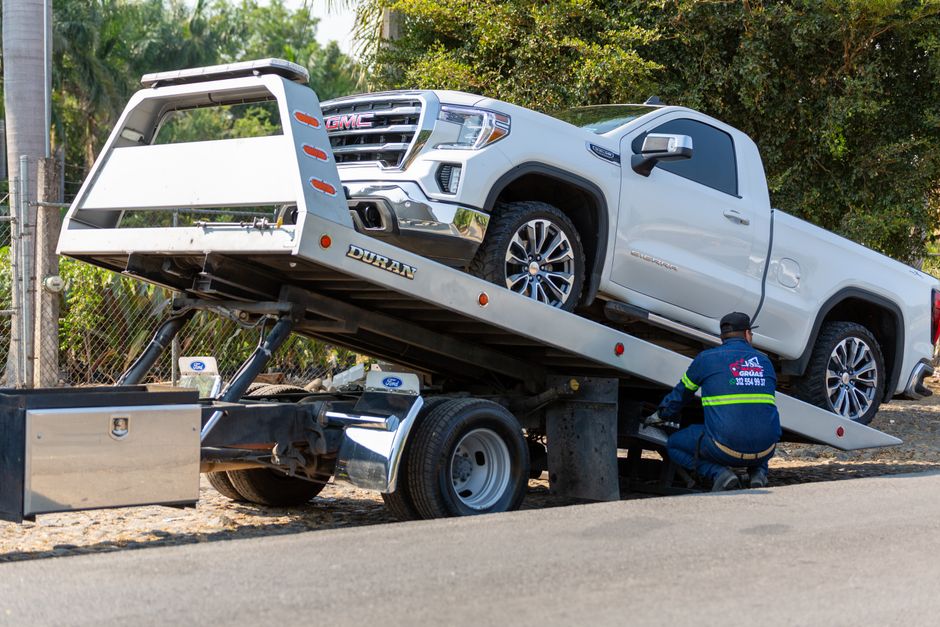
Not all tows are the same, and the type of truck that shows up matters more than most drivers realize. The two most common methods — flatbed and wheel-lift — each have strengths, and choosing the right one protects your vehicle from unnecessary wear or damage. Here's how they differ and when each makes sense.
What is flatbed towing?
A flatbed truck, sometimes called a rollback, has a large platform that tilts and lowers to the ground. Your vehicle is pulled or driven onto the bed, secured, and carried with all four wheels off the road. Because nothing on your car is dragging or rolling, this method is widely considered the gentlest way to transport a vehicle.
What is wheel-lift towing?
A wheel-lift truck uses a metal yoke that slides under two of your vehicle's wheels — usually the drive wheels — and lifts that end off the ground. The opposite two wheels stay on the road as the vehicle is towed. It's a modern evolution of the old hook-and-chain method, without the frame contact that older systems risked.
When flatbed towing is the better choice
A flatbed is often the safest option for several situations:
- Low-clearance and lowered vehicles, where a wheel-lift could scrape bumpers or undercarriage.
- All-wheel-drive and four-wheel-drive vehicles, since towing with two wheels on the ground can strain the drivetrain.
- Electric vehicles, many of which manufacturers recommend transporting with all wheels off the ground.
- Luxury, classic, or exotic cars, where owners want to minimize any risk.
- Severely damaged vehicles after an accident that can't roll safely.
If your vehicle falls into any of these groups, ask specifically for a flatbed when you call.
When wheel-lift towing works well
Wheel-lift trucks are nimble and can be a practical choice for:
- Standard front- or rear-wheel-drive cars in good condition for shorter tows.
- Tight spaces like crowded parking structures or narrow streets, where a compact wheel-lift maneuvers more easily than a large flatbed.
- Quick relocations, such as moving an illegally parked car a short distance.
For many everyday tows of ordinary vehicles, a properly operated wheel-lift does the job well.
Why it matters for your drivetrain
The biggest risk with the wrong method is drivetrain damage. If a vehicle's drive wheels stay on the ground and spin during a tow, it can put stress on the transmission or differential of certain vehicles. That's why AWD and many modern cars are safest on a flatbed. When in doubt, your owner's manual often states the manufacturer's recommended towing method — and a good operator will know to ask.
How to make sure you get the right truck
The key is communication. When you call a towing service, describe your vehicle clearly: its make and model, whether it's lowered, and whether it's all-wheel or four-wheel drive. Ask which method they'll use and why. A knowledgeable dispatcher will match the truck to your vehicle without you having to push — but it never hurts to confirm.
The bottom line
Flatbed towing offers maximum protection and is the go-to for low, AWD, electric, high-value, or badly damaged vehicles. Wheel-lift towing is efficient and handy for standard cars and tight spots. Neither is universally "better" — the right choice depends on your specific vehicle and situation. When you compare local providers on this directory, look for ones with the equipment your vehicle needs, and don't hesitate to ask which method they'll bring to you.